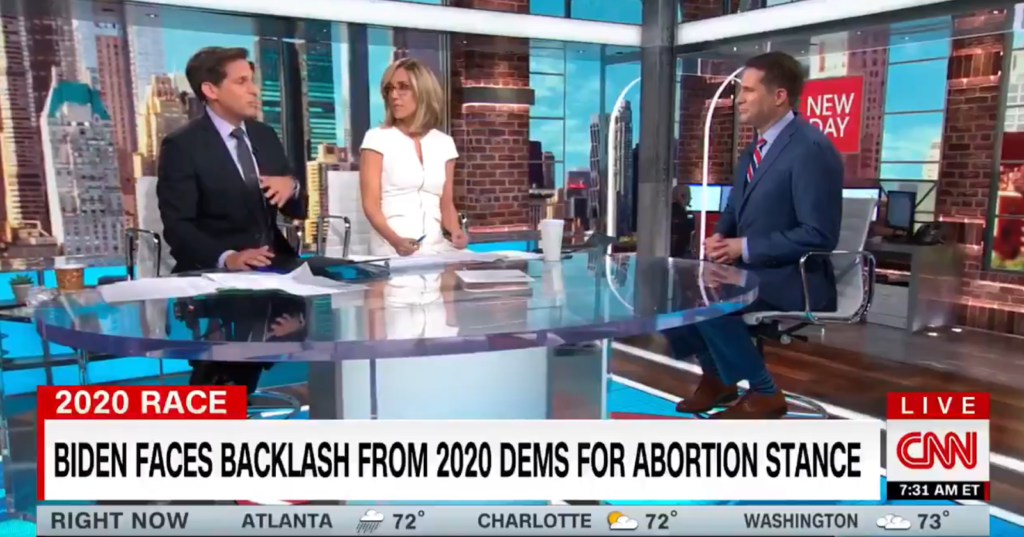
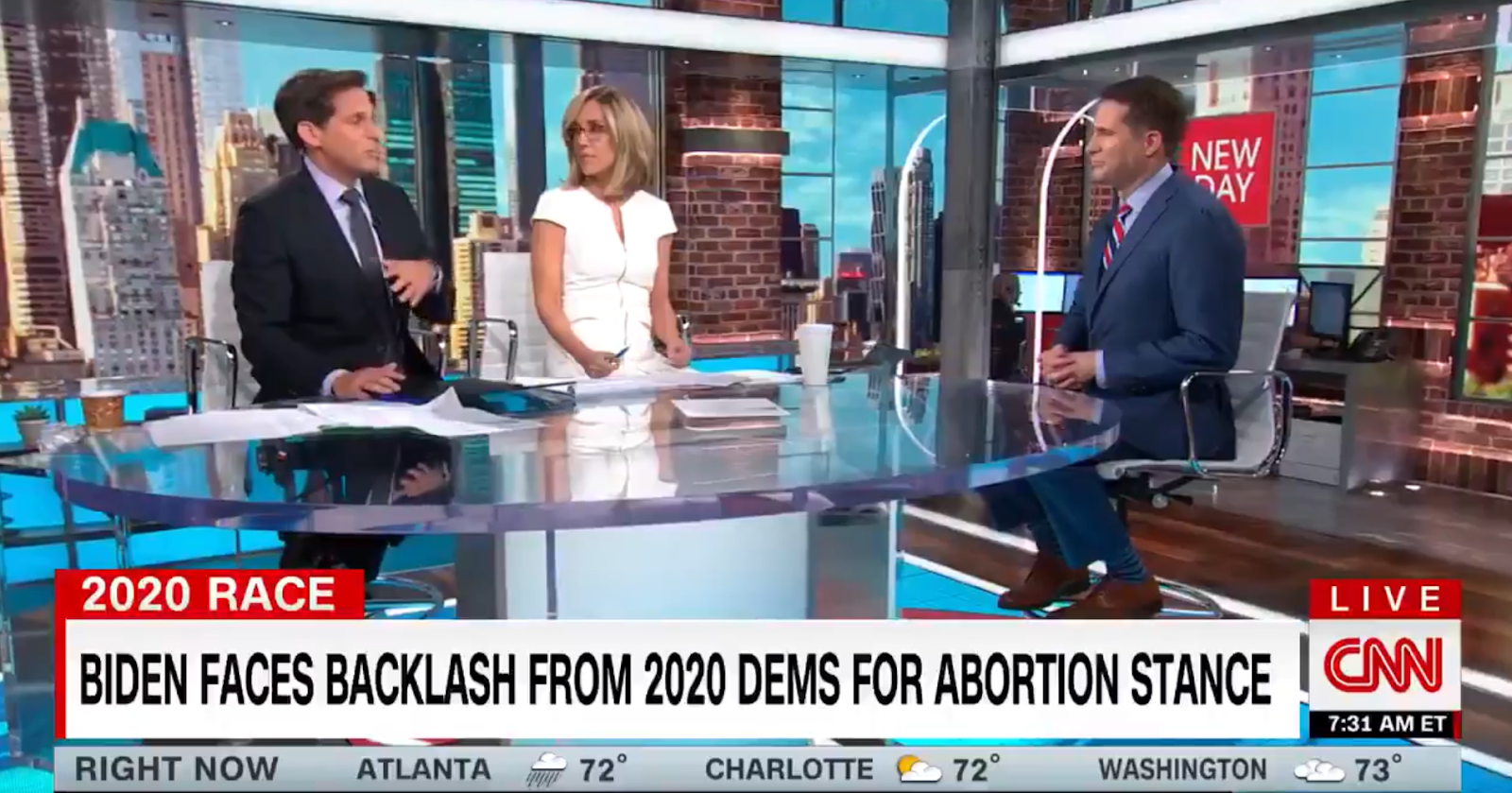
In 2019, during an interview on CNN, one of the Democratic presidential candidates Seth Moulton expressed a desire to see the removal of laws barring federal funding from going to abortion.
“I think it’s wrong. It disproportionately attacks women who don’t have the private means to afford an abortion. It’s sort of like saying, you know, I support the troops but don’t want to pay them. I mean, that’s the analogy here.”(1)
While many find the idea of tax dollars going to abortion inconsistent with the arguments used to defend abortion, Seth isn’t alone. Out of the twenty four Democrats running for president, twenty one have expressed a desire to repeal the Hyde amendment, and the platform of the Democratic party itself has unequivocally adopted the position.
“We will continue to oppose—and seek to overturn—federal and state laws and policies that impede a woman’s access to abortion, including by repealing the Hyde Amendment.”(2)
Some pro-life libertarians are understandably frustrated about this. Many libertarians though don’t seem to be aware that we already provide taxpayer funding for abortion, not just through indirect funds supplied to abortion providers and such, but direct funding for abortions.
Currently, at least fifteen states provide direct Medicaid funding for abortions. This funding pays for over a hundred and eighty thousand abortions every year in the United States. A huge portion of the abortions performed here.(3)(4)(5)
Research has shown that this funding has disastrous effects. Far more pregnancies are aborted than when such funding is not present, with as many as one third of pregnancies that would have resulted in an abortion had state funds been available instead being carried to term when that funding is not provided.(6)(7)(8)
Not only does removing this funding reduce abortions, it reduces unwanted pregnancies as well. The effect is so large that not only do births remain static despite the reduction in abortion, but sometimes births actually decrease.(9)
Not only does lack of Medicaid funding not result in illegal abortions or increased hospitalizations, it also markedly decreases hospitalizations and complications as a result of legal abortion. It helps prevent later term abortions that are particularly expensive and at a greater risk of complications protecting not only the child but the woman as well.(10)(11)
While the leaders of the pro-life movement have often been libertarians, in my eyes I understand that not all libertarians are pro-life. Many feel that government involvement in the issue of abortion is wrong and some even champion it as a core part of liberty and freedom. Though I am not a libertarian myself, I understand where you are coming from.
I won’t attempt to change anyone’s minds on the general applicability of libertarian ideology to abortion here. But please, devote more attention to the issue of taxpayer funding for abortion. It could use some libertarian good sense right now.
Sources
- New Day: Interview with Rep. Seth Moulton June 6, 2019. 7:30–8:00 a.m. ET. Interview transcript.
- 2016 Democratic Party Platform July 21, 2016. Historical platform text archived by the American Presidency Project.
- Public Funding for Abortion July 21, 2004. The original page could not be recovered during verification. Its original reference is retained.
- Public Funding for Family Planning, Sterilization and Abortion Services, FY 1980–2010 Guttmacher Institute. March 2012.
- Are American Taxpayers Paying For Abortion? Forbes, The Apothecary. October 2, 2015; updated April 14, 2022.
- The effects of short-term variation in abortion funding on pregnancy outcomes Journal of Health Economics. April 1999; 18(2):241–257. doi:10.1016/S0167-6296(98)00048-4. Earlier NBER working-paper version (1996)
- Effects on pregnancy outcomes of changes in the North Carolina State Abortion Fund Population Research and Policy Review. August 2002; 21(4):319–338. doi:10.1023/A:1020078406216.
- Effects of state welfare, abortion and family planning policies on premarital childbearing among white adolescents Family Planning Perspectives. November–December 1990; 22(6):246–251, 275. doi:10.2307/2135680.
- The effect of Medicaid abortion funding restrictions on abortions, pregnancies and births Journal of Health Economics. October 1996; 15(5):555–578. doi:10.1016/S0167-6296(96)00495-X. Publisher record
- Restrictions on Medicaid Funding for Abortions: A Literature Review Guttmacher Institute. June 2009.
- Effects of restricted public funding for legal abortions: a second look American Journal of Public Health. January 1981; 71(1):77–81. doi:10.2105/AJPH.71.1.77.