For women with a tubal pregnancy, many can wonder if it is at all possible to save their child, or if abortion is a medical necessity. Often, abortion is presented as the only solution. However, this is not always the case. The facts of the matter are complex and inconvenient, and rarely discussed.
A tubal pregnancy is a particular type of ectopic pregnancy where the embryo implants outside of the uterus, in this case in the Fallopian tubes. This is quite a problem because they are not designed to hold an embryo, and the size of the unborn child will very quickly exceed the size of the tube itself.
When someone talks about full term tubal pregnancy, a lot of people have a hard time imagining how such a thing could even work. Some people will even just dismiss this as being impossible outright, and I don’t think we can really fault them on that because to have a full term tubal pregnancy is like trying to fit a watermelon in a straw.

So, why is it even a question to ask if a baby can survive a tubal pregnancy, or if you could fit a watermelon into a straw and carry it around for nine months? Because in rare cases, that is essentially what happens.
During tubal pregnancy, the Fallopian tubes can actually expand to amazing dimensions to accommodate the growing child. Though in many cases they rupture, in some they stretch and distended to accommodate the child as it grows, and the pregnancy can end up going to full term without ever rupturing the Fallopian tubes.
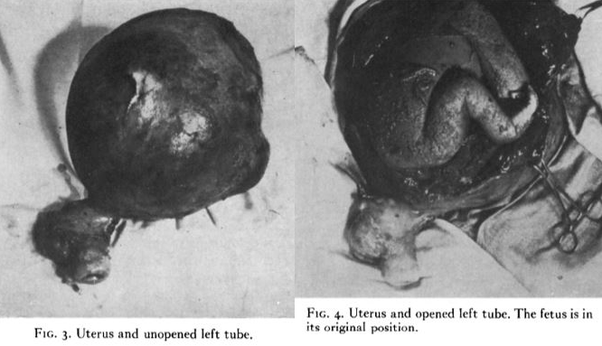
These children aren’t always small either. There have been many recorded cases of babies weighing as much as 10 pounds upon extraction from the Fallopian tubes, and on more than one occasion there have been cases of twin tubal pregnancies going to term as well. Particularly when good medical care is given, the outcomes can actually be acceptable.(1)(2)
To be clear, tubal pregnancies very dangerous, but it’s not as straightforward as people make it out to be. It varies on a case by case basis, and there are a great many case recorded in medical literature where both mother and baby survived in good health. This happens a lot more often than most people would tend to think, especially since it’s often presented as being impossible.
Often, full term tubal pregnancy results in deformities for the child due to intrinsic defects or the intense pressure they were under during pregnancy. In many other instances, the pregnancy still goes to term within the Fallopian tubes, but the child does not survive. This is quite common, and sometimes, ectopic pregnancies that go undiagnosed can result in them being carried for months or years after reaching full term. Some cases report the child being carried in the tube for as long as seven, eleven or even fifteen years.(3)(4)(5)(6)(7)(8)(9)
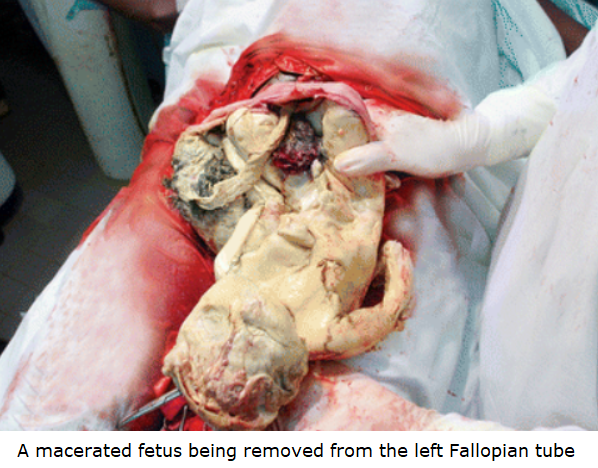
Additionally, it is also worth noting that following aborted or ruptured tubal pregnancy sometimes the child can end up reimplanting elsewhere. This is known generally as secondary abdominal pregnancy, and most ectopic abdominal pregnancies originally began as tubal pregnancies before shifting in this manner. These abdominal pregnancies are significantly rarer than tubal pregnancies, but they continue to term far more often. It is not particularly uncommon to see late term abdominal pregnancies resulting in good maternal and fetal outcomes, though malformations and deaths are still quite common.(10)(11)(12)(13)
The reason why all of this is important to note is because, like many other such cases, tubal pregnancies are often presented as being straightforward instances of incompatibility with life. Women who want children are told nothing about any potential options other than abortion, efforts aren’t made to help them if they choose to try to carry, and such fringe cases are used to justify abortion as a whole. There likely still is many cases where it is wholly necessary to remove the child to save the mother’s life. But it is not such a clear cut thing, and at the moment, no effort is even being made to help in these situations.
We need to move beyond where we simply dismiss these children as already dead, or utilize their deaths to justify the killings of countless others. Medical providers need to be more aware of the options that women in these situations have, and what they can do for them, before just immediately defaulting to abortion as the only solution. Only then can we move forward and actually assist these women and children.