Ectopic pregnancy is often seen as a clear case for abortion, but the truth is more complicated than that.
Despite how rare they are, a common topic in debates over abortion tends to be cases where the mother’s life is threatened. One of the most prominent examples of this that pro-choice advocates tend to use is ectopic pregnancies, which they point to as an example of instances where abortion is unquestionably necessary.
For most pro-life advocates, the provision of medical care necessary to save the mother’s life as acceptable, even if doing so necessitates ending the life of the child. Often, this is not even considered to be an abortion legally or ethically so long as reasonable efforts are taken to preserve the life of the child. But in most cases, even in cases of ectopic pregnancy, abortion often is not the only solution, and if there are ways to save both the mother and child’s life, pro-life advocates tend to believe that those options should be explored first.

Since as early as 1917, it has been suggested in medical literature that ectopic pregnancy could potentially be treated by relocation instead of removal. By transplanting the ectopic pregnancy from the Fallopian tubes (or elsewhere) to within the uterus, the procedure resolves the ectopic pregnancy, presenting no risk to the mother if unsuccessful but perhaps improving the odds of survival for the unborn child. Though these procedures have rarely been performed, successful cases of relocation have been recorded in the peer-reviewed journal Surgery, Gynecology and Obstetrics, and reported on in other journals such as the American Journal of Obstetrics and Gynecology.(1)(2)
There is still much debate as to whether or not we have developed adequate surgical techniques and have the experience needed to make removal relocation a regularly viable solution to ectopic pregnancy. Some even insist that reimplantation is a biological impossibility and that evidence and research on the subject amounts to fiction. However, while some might not have confidence in our ability to relocate such pregnancies, something a lot of people don’t realize is that this sort of thing happens naturally all the time.(3)
Known as secondary abdominal pregnancy, the embryo or fetus occasionally reattachs elsewhere in the abdominal cavity and continues to grow after detachment and expulsion from its initial seat of development, which is almost always the Fallopian tubes. This can happen months into gestation and can result from tubal rupture, tubal abortion, and even rupture or perforation of the uterus.(4)
Most cases of ectopic abdominal pregnancies are in fact secondary implantation from aborted or ruptured tubal pregnancies in the first place. Though much more prone to complications than uterine pregnancies, many of these continue to term with good maternal and fetal outcomes, which is why some research advises that extrauterine pregnancies should not be automatically terminated.(5)(6)
The ability of the child to survive in these situations is astounding. It’s been developing outside the womb, it’s just undergone a violent separation from its initial implantation site, and it still hasn’t reached its proper environment within the uterus, yet it not only is capable of reimplanting into a variety of unsuitable abdominal environments but it can also continue to develop into a healthy and mature child in many cases.(7)
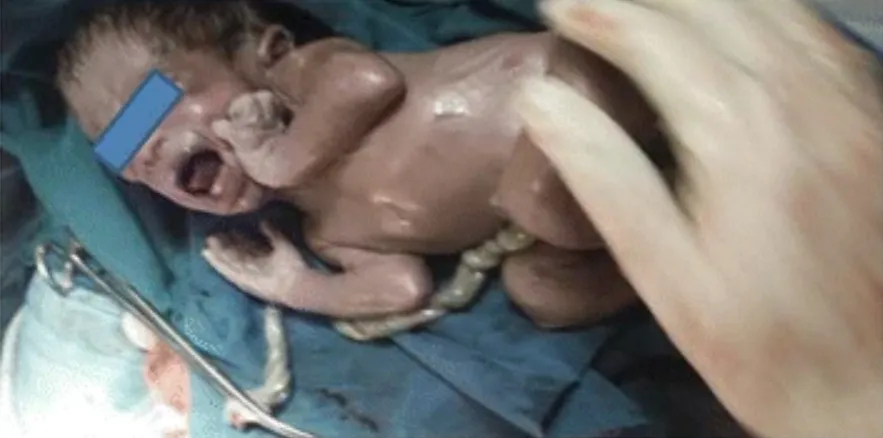
Given that reimplantation can happen naturally in far less than ideal circumstances, it is absurd to claim that the idea of reimplantation is science fiction. It is not a biological impossibility that gives one leave to deride those who advocate for the exploration of artificial relocation as a potential solution to ectopic pregnancy and infertility or to block pro-life laws from being implemented.
Not only can these pregnancies theoretically be relocated, however, but ectopic pregnancies can continue to term and result in live births whether the pregnancy changes location or not. Barring the use of artificial relocation for whatever reason, ectopic pregnancies are not necessarily fatal for the mother or the child, and in fact, they can often be monitored and treated safely as they progress naturally, without always having to resort to abortion.Potential problems that may occur such as ruptures can be treated, often with rates of success similar to that of any abortive methods that could be offered, and pregnancies that continue beyond this can be managed safely in many cases.(9)(10)(11)
Many of these ectopic pregnancies end in miscarriage at one stage or another, but not all of them, as we’ve established. For those few that progress to stages of advanced extrauterine pregnancy, whether they relocate or persist in their original environment, good maternal fetal outcomes are not uncommon, and maternal deaths are quite rare when properly monitored and cared for. Even in third world countries, nearly one in three advanced abdominal pregnancies can result in a live birth, despite what we might consider substandard medical care.(12)(13)
Ectopic pregnancy is not so clear-cut an example of absolute medical necessity for abortion as people often tend to think, and before we take any action that necessitates the destruction of the child’s life, we should make sure we have thoroughly explored all other options first.